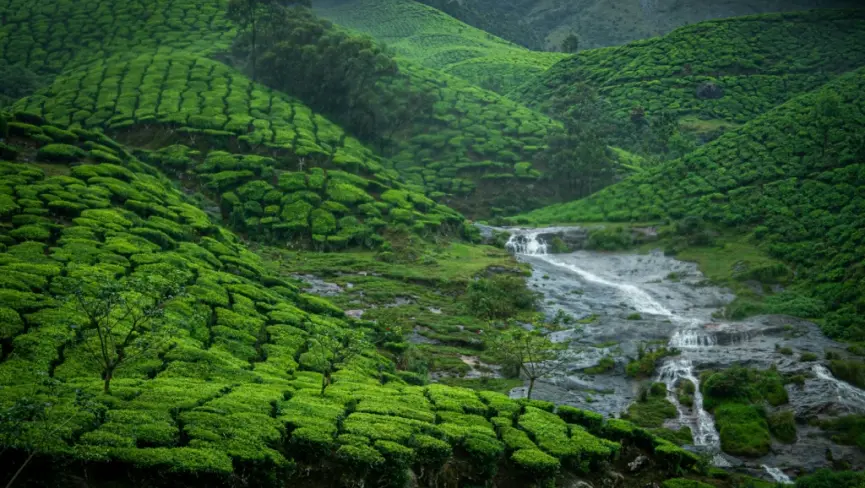
Munnar Through the Seasons Best Time to Visit, Weather, and Travel Experiences
Nestled at 1,600 metres above sea level in Kerala's Idukki district, Munnar is not just a destination — it is a living, breathing canvas that transforms with every passing season. The rolling tea gardens shift from emerald to amber; the mist thickens and thins like breath; the Neelakurinji blooms once in twelve years and turns entire hillsides violet. Whenever you arrive, Munnar has a story to tell.
This comprehensive guide walks you through Munnar's four distinct seasonal personalities — the crisp winter clarity, the golden summer warmth, the dramatic monsoon curtain, and the jewel-bright post-monsoon glow — so you can choose the experience that speaks to you.
At a Glance — Best Time to Visit Munnar
Month-by-Month Weather in Munnar
Understanding Munnar's microclimate is the key to planning a seamless trip. The hill station's altitude creates weather patterns dramatically different from the Kerala plains below.
| Month | Temp (°C) | Rainfall | Conditions | Rating |
|---|---|---|---|---|
| January | 8–20°C | Very Low | Clear, crisp, misty mornings | |
| February | 10–22°C | Very Low | Pleasant, sunny days | |
| March | 12–24°C | Low | Warm, slightly hazy | |
| April | 15–25°C | Moderate | Pre-monsoon showers begin | |
| May | 16–25°C | Moderate–High | Warm, occasional storms | |
| June | 15–22°C | Very High | Southwest monsoon arrives | |
| July | 14–20°C | Extreme | Heavy rains, landslide risk | |
| August | 14–20°C | Extreme | Peak monsoon, roads affected | |
| September | 15–22°C | High | Rains ease, lush greenery | |
| October | 13–22°C | Low–Moderate | Post-monsoon glow, waterfalls | |
| November | 10–20°C | Very Low | Cool, clear skies return | |
| December | 8–18°C | Very Low | Coldest month, festive crowds |
Winter in Munnar (October – February)
The Golden Season
October · November · December · January · February
Winter is unequivocally Munnar's finest chapter. The sky clears to a deep, unbroken blue, the tea gardens glow with fresh-plucked rows of vivid green, and the air carries the sharp sweetness of eucalyptus. Temperatures hover between 8°C and 22°C — cool enough for comfortable trekking but never hostile.
December and January are the coldest, with temperatures sometimes dipping below 5°C at dawn in higher elevations like Top Station. Fog rolls in at night and dissipates magnificently by mid-morning, creating cinematic sunrise views over the Palani hills.
Why Winter is Perfect
The post-monsoon transformation leaves Munnar with a surreal clarity. Every waterfall — Attukal, Nyayamakad, Cheeyappara — runs at full volume with crystalline water. The Eravikulam National Park reopens (typically from January), and the rare Nilgiri Tahr roam confidently across the grasslands.
Christmas and New Year draw massive crowds. Hotels fill up 3–4 weeks in advance and prices spike by 40–60%. Book accommodation by late October if you're planning a December visit. Alternatively, choose the quieter week between January 7–15 for similar weather without the festive rush.
Winter Highlights
- Sunrise from Top Station (1,700 m) with clouds rolling below
- Tea leaf plucking experience at KDHP Estates
- Jeep safaris to Rajamala Wildlife Sanctuary
- Trekking on the Kolukkumalai peak trail (highest organic tea estate)
- Waterfalls at Nyayamakad and Attukal reach full beauty
- Night sky gazing — minimal light pollution at higher altitudes
Summer in Munnar (March – May)
The Hidden Gem Season
March · April · May
While the rest of India swelters under summer heat, Munnar remains pleasantly warm at 15°C–25°C. The crowds thin dramatically after February, hotels slash their rates by 30–50%, and the hills take on a different, more sun-drenched character. April and May bring occasional pre-monsoon thunder showers that last an hour and leave everything sparkling.
This is an underrated season for budget travelers and photography enthusiasts who prefer dramatic, moody light to the crisp winter clarity.
Eravikulam National Park typically closes for a period in spring (usually February–May) to protect Nilgiri Tahrs during their calving season. Confirm availability with the Forest Department before planning your visit around the park.
Why Summer Deserves More Credit
The rolling mists that dominate winter give way to expansive, unobstructed panoramas. You can see the ghats stretch for 60–80 km on clear April mornings. The tea gardens are in active harvest, and you can watch workers pick two-leaves-and-a-bud with practised precision. The Pothamedu Viewpoint is at its most dramatic with bright green rolling hills unmarred by haze.
May evenings bring pre-monsoon electrical storms that frame the hills in lightning — a spectacular and surreal experience for weather enthusiasts and photographers alike. Just ensure you're at a safe, covered vantage point.
Monsoon in Munnar (June – September)
The Dramatic & Misunderstood Season
June · July · August · September
The Southwest Monsoon arrives in Munnar around mid-June and transforms the landscape into something almost mythic. Waterfalls that barely trickled in April now thunder across cliff faces with raw force. Every shade of green intensifies. The air smells of wet earth, cardamom, and rain on warm rock.
July and August receive the heaviest rainfall — sometimes exceeding 300 mm in a single week. Landslide risk on ghat roads (especially Munnar–Palakkad) is real and should not be dismissed. Many experienced travelers actually love monsoon Munnar for its isolation and raw beauty, but it demands careful planning and flexibility.
Check road conditions before travel, especially on the Munnar–Coimbatore and Munnar–Kodaikanal routes. Carry rain gear at all times. Avoid trekking alone on unmarked trails during heavy rains. The Kerala Tourism helpline (1800-425-4747) provides daily road condition updates.
Who Should Visit During Monsoon?
The monsoon is ideal for Ayurvedic retreats. Traditional Kerala medicine considers the monsoon season (known as Karkidaka) the best time for deep-cleansing Panchakarma treatments. Many wellness resorts in Munnar offer special monsoon packages with discounts of up to 40%.
September is the transition month — rains ease considerably, the landscape remains lush, and waterfalls are at their most magnificent. This is perhaps the single best month for waterfall tourism in Munnar. Cheeyappara and Valara Falls on the Kochi–Munnar highway are at jaw-dropping volume.
The Neelakurinji Phenomenon
Once every 12 years, the Strobilanthes kunthiana — locally called Neelakurinji — blooms across Munnar's Shola forests and hillsides, turning them a breathtaking blue-violet. The last blooming occurred in 2018; the next is expected around 2030. If you can time your visit to coincide, it is a once-in-a-generation travel experience.
Post-Monsoon Munnar (October – November)
The Renewal Season
October · November
October is Munnar's sweet spot — the monsoon withdraws, leaving behind a landscape of almost supernatural vibrancy. Every surface is scrubbed clean; the air carries zero dust; waterfalls still cascade with monsoon-fed vigor but the skies are increasingly blue. This is the moment photographers dream about.
November marks the true beginning of the tourist season as temperatures begin to cool and visibility improves dramatically. The Eravikulam grasslands turn golden-green, and the estates begin the major harvest season.
The fortnight between September 25 and October 15 offers the most extraordinary photographic conditions in Munnar — lush greenery, active waterfalls, clearing skies, and dramatic cloud formations as the monsoon retreats. Golden hour light on the tea terraces during this period is genuinely extraordinary.
Travel Experiences in Munnar — Season by Season
Beyond the seasonal weather, Munnar offers a rich spectrum of curated experiences. Here's what's available and when:
Tea Plantation Tours
Visit active KDHP estates to understand orthodox tea processing. Best in Oct–Apr when harvest is underway. The Tea Museum near Nallathanni Estate is open year-round.
High-Altitude Trekking
Kolukkumalai Trek (2,100 m), Meesapulimala (2,640 m), and the Chokramudi peak trail are best tackled Nov–Mar. Carry layered clothing; summit temperatures can drop to 3°C.
Eravikulam National Park
Home to the endangered Nilgiri Tahr. Open Jan–May (approximately). The 3 km park trail winds through beautiful grasslands. Early morning entry recommended.
Mattupetty Dam & Boating
The Indo-Swiss livestock project and boating at Mattupetty reservoir are year-round experiences. The dam is particularly scenic after monsoon when water levels are at peak.
Waterfall Exploration
Cheeyappara, Valara, Nyayamakad, and Attukal are best visited Sep–Nov. Attukal Falls (Rajamala area) requires a short trek and rewards with seclusion.
Ayurvedic Wellness Retreats
Monsoon is traditional Panchakarma season. Resorts like Windermere Estate and CGH Earth's Shalimar Spice Garden offer tailored monsoon wellness packages.
Night Sky Gazing
Munnar's minimal light pollution makes it ideal for stargazing. Top Station and the Chinnar plateau (during clear winter nights) offer Milky Way views rare in South India.
Mountain Cycling
Guided cycling routes through plantation roads are available Oct–Apr. The Pothamedu circuit (16 km) winds past tea, coffee, and cardamom estates with stunning valley views.
Festivals & Events Calendar
Munnar's cultural calendar adds richness to every season. Here are the key events to plan around:
Annual horticultural exhibition celebrating the valley's endemic flora. Chrysanthemum and dahlia displays draw visitors from across Kerala.
The Malayalam New Year is celebrated with fireworks, feasts, and the traditional Vishukkani arrangement. Homestays offer authentic festive experiences.
Kerala's harvest festival transforms Munnar with floral carpets (Pookalam), Onasadya feast, and boat race events in nearby Thekkady. Plan 2 weeks ahead for accommodation.
An increasingly popular running event through plantation roads. Post-monsoon October weather makes it ideal. Registration opens several months in advance.
The hill town takes on a festive character with hotels and resorts organizing bonfires, carol nights, and special Keralan feasts. Book well in advance.
What to Pack — By Season
Winter Packing (Oct – Feb)
Summer Packing (Mar – May)
Monsoon Packing (Jun – Sep)
How to Reach Munnar
Munnar is accessible by road from several major Kerala and Tamil Nadu cities. No direct rail or air connectivity exists to Munnar itself — the nearest options are:
- By Air: Cochin International Airport (COK) — approximately 110 km, 3–4 hours by taxi. The most convenient entry point.
- By Rail: Aluva or Ernakulam stations (Kochi) — same distance as the airport. Pre-book taxis or board KSRTC buses from Aluva.
- By Road from Kochi: NH 183 via Adimali — a scenic but winding 4-hour journey. Opt for daytime travel.
- From Thekkady (Periyar): 90 km, approximately 3 hours through beautiful forested ghat roads. A popular route for touring both destinations.
- From Coimbatore: 155 km via Palakkad — a dramatic ghat crossing. Best avoided during heavy monsoon rains.
The ghat roads to Munnar involve sharp hairpin bends. Motion sickness is common. Travel by day only, carry medications if prone to nausea, and avoid night driving during monsoons. Self-drive tourists should note that certain sections of the Munnar–Top Station road are closed to large vehicles.
Frequently Asked Questions
Related Blog
Munnar Through the Seasons Best Time to Visit, Weather, and Travel Experiences

Top Tourist Attractions in Munnar National Parks, Viewpoints, Waterfalls & Tea Estates

Discover Adventure & Serenity Top Eco-Tourism and Adventure Activities in Munnar, Kerala
Why Munnar Is Keralas Best Hill Station – A Complete Guide