

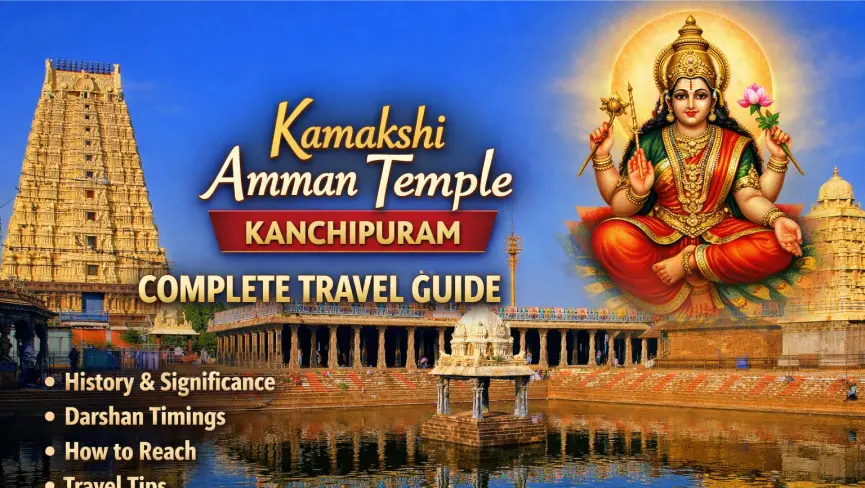
Kamakshi Amman Temple Kanchipuram: Complete Travel Guide
Kamakshi Amman Temple, located in the historic city of Kanchipuram, Tamil Nadu, is one of the most revered temples dedicated to Goddess Kamakshi, a powerful manifestation of Goddess Parvati. Known as a major center of Shakti worship, the temple holds immense spiritual, historical, and cultural significance and attracts thousands of devotees and tourists throughout the year.
Kanchipuram, often called the “City of Thousand Temples,” is one of the seven sacred cities of India, and Kamakshi Amman Temple stands as its spiritual heart. According to ancient legends, Goddess Parvati performed intense penance here to reunite with Lord Shiva, leading to her divine form as Kamakshi, the goddess with compassionate eyes.
With its magnificent Dravidian architecture, sacred rituals, and deep-rooted mythology, Kamakshi Amman Temple offers visitors a truly divine and enriching experience, making it an essential pilgrimage destination in South India.
History & Mythological Significance
Kamakshi Amman Temple holds immense historical and mythological importance in Hindu tradition and is considered one of the most powerful centers of Shakti worship in South India. According to ancient legends, Goddess Parvati performed severe penance at Kanchipuram under a sacred mango tree to reunite with Lord Shiva. Pleased with her devotion, Lord Shiva blessed her and manifested her as Goddess Kamakshi, meaning “the one with compassionate and loving eyes.”
The temple is closely associated with Sri Chakra worship, a sacred geometric symbol representing cosmic energy and divine feminine power. It is believed that Adi Shankaracharya established the Sri Chakra in front of the main deity to balance and channel the goddess’s immense spiritual energy for the welfare of devotees.
Historically, the temple flourished under the patronage of the Pallava, Chola, and Vijayanagara dynasties, each contributing to its architectural growth and religious prominence. Over centuries, Kamakshi Amman Temple has remained a symbol of divine grace, spiritual wisdom, and cultural heritage, continuing to inspire millions of devotees from across the country.
Architecture Highlights
Kamakshi Amman Temple is a splendid example of traditional Dravidian architecture, reflecting centuries of artistic excellence and spiritual symbolism. The temple complex showcases the architectural contributions of the Pallava, Chola, and Vijayanagara dynasties, making it a visual and cultural landmark of Kanchipuram.
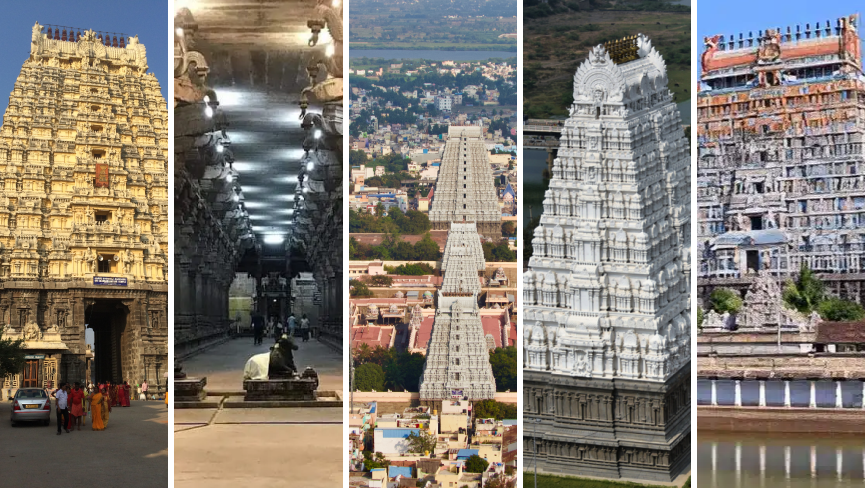
One of the most striking features of the temple is its towering gopurams (ornamental gateways), richly decorated with colorful sculptures of gods, goddesses, celestial beings, and scenes from Hindu mythology. These gopurams serve as symbolic gateways between the earthly and divine realms.
The sanctum sanctorum houses Goddess Kamakshi in a unique seated Padmasana posture, symbolizing peace, grace, and benevolence. In front of the sanctum lies the sacred Sri Chakra, an important tantric symbol representing cosmic energy and divine power.
The temple also features spacious pillared mandapams adorned with intricate carvings and a sacred temple tank used for ritual purification and festival ceremonies. Together, these architectural elements create a serene and spiritually uplifting atmosphere for devotees and visitors alike.
Darshan Timings
Kamakshi Amman Temple is open to devotees every day, allowing sufficient time for peaceful darshan and prayer. The darshan schedule is divided into morning and evening sessions, following traditional temple customs.
Daily Darshan Schedule
| Session | Timings |
|---|---|
| Morning Darshan | 5:30 AM – 12:30 PM |
| Evening Darshan | 4:00 PM – 8:30 PM |
Darshan may be temporarily paused during special poojas and rituals. Timings may also vary on Fridays, festival days, Pournami (Full Moon), and Amavasya (New Moon).
For a calm and less crowded experience, early morning darshan on weekdays is highly recommended.
Daily Pooja Schedule
The daily pooja rituals at Kamakshi Amman Temple are performed according to ancient Agamic traditions. Each pooja is conducted with devotion and offers devotees an opportunity to seek the blessings of Goddess Kamakshi.
Regular Daily Poojas
| Pooja Name | Time | Significance |
|---|---|---|
| Kalasanthi | Early Morning | First pooja of the day, marking temple opening |
| Uchikalam | Noon | Midday offering to the deity |
| Sayaraksha | Evening | Pooja performed before sunset |
| Arthajamam | Night | Final pooja before temple closing |
During these poojas, the deity is adorned with flowers and sacred ornaments, and offerings (naivedyam) are made along with Vedic chants.
Special Poojas & Auspicious Days
- Fridays
- Pournami (Full Moon)
- Amavasya (New Moon)
- Festival days such as Navaratri and Brahmotsavam
Devotees are advised to arrive early on special pooja and festival days, as large crowds are common.
Dress Code & Temple Rules
Visitors to Kamakshi Amman Temple are expected to follow a traditional and respectful dress code, in keeping with the sacred atmosphere of this ancient Hindu temple. Adhering to the temple rules ensures a peaceful and spiritually fulfilling experience for all devotees.
Recommended Dress Code
- Men: Dhoti, veshti, or trousers with a shirt or kurta
- Women: Saree, salwar kameez, or other modest traditional attire
- Avoid: Shorts, sleeveless tops, mini skirts, and revealing clothing
Temple Rules for Devotees
- Mobile phones, cameras, and electronic gadgets are not allowed inside the temple premises
- Footwear must be removed before entering the temple
- Maintain silence and follow queue discipline during darshan
- Photography and videography are strictly prohibited inside the temple
- Consumption of alcohol or tobacco before entering the temple is not permitted
- Follow instructions given by temple authorities and security staff
Observing the dress code and temple rules reflects respect for tradition and helps preserve the sanctity of Kamakshi Amman Temple.
Best Time to Visit
The best time to visit Kamakshi Amman Temple is during the cooler months, when the weather is pleasant and suitable for temple darshan and sightseeing in Kanchipuram. Choosing the right season helps ensure a comfortable and spiritually enriching experience.
Ideal Season
- October to March: Pleasant climate with mild temperatures, making it the most recommended time for pilgrims and tourists.
Festival Season
- Navaratri: Grand celebrations with special poojas and cultural events
- Brahmotsavam: Annual temple festival attracting thousands of devotees
- Theppotsavam (Float Festival): Colorful procession held at the temple tank
Days to Plan Carefully
- Fridays, weekends, and public holidays due to heavy crowd
- Pournami (Full Moon) and Amavasya (New Moon) days
For a peaceful darshan, early morning hours on weekdays are highly recommended. Festival visits offer a vibrant spiritual atmosphere but require extra planning.
1888 / Person